Stories

Real breakups, retold

Each post retells a real story published elsewhere, with credit and a link to the original, followed by one lesson you can use.

Business

He was right about everything except how to keep his co-founder

Going through a breakup right now? Apply for coaching

Watercolour illustration of a small startup office: one man carries a cardboard box toward the door while his co-founder sits alone at the shared desk with a laptop, head lowered

He could feel himself doing it. In the middle of the argument, he could watch himself steamroll his co-founder, and he kept going anyway.

What happens when you're right about every decision and still lose the person you built it with? Stan Liu found out. Here's his story.

The story

Stan Liu had been good at work for a long time. He'd been the engineer carrying out someone else's vision, and he'd been the manager setting direction for a team. He had bosses he respected and reports he cared about. He thought that meant he understood relationships.

Then he had a co-founder.

A co-foundership, he writes, is neither up nor down. There's no org chart to settle a disagreement. Nobody's performance review depends on the other. You're two people who decided to build something together, and every decision has to survive the fact that neither of you reports to the other.

Stan didn't know how to do that. His whole career had been vertical. He knew how to take direction and he knew how to give it. He didn't know what to do when neither applied.

So he did what he knew. He pushed. He pushed his opinions, his framing, his version of what was right, with the same intensity he'd always brought to work. Strong opinions, clearly stated, until the other person either agreed or gave in. What he never did was what an equal partnership asks for: negotiate, compromise, and sit with a disagreement that isn't settled yet.

Be honest for a second. Is there a place in your life where you're the listener, and another where you're the one who pushes until everyone gives in?

In his personal life, he had already learned better. He'd learned that you can't bulldoze the people you love and expect them to stay. He'd learned to listen, to yield, to let someone else be right. But the co-foundership felt like work, and at work he had a harder mode.

And he knew it. That's the hardest part of his story. He could feel it happening in real time, watching himself flatten his co-founder's view with the sheer force of his conviction. Then he'd go home and be the softer version of himself, the one who'd learned better, and feel ashamed that he was two different people. The person he'd worked so hard to become at home couldn't make it through the door of their office.

Stan quotes the researcher Brené Brown on this: "Shame loves secrecy. When we bury our story, the shame metastasizes." He carried shame about the things he wasn't good at, about the gap between how he wanted to show up and how he actually did, and about the problems he could see but chose to ignore because facing them meant facing himself.

The shame didn't make him stop. As he puts it, it made him keep going while knowing he should stop, and then hate himself for it afterward. He ignored the problem because the problem was him, and he didn't know how to fix himself in the middle of a workday.

There was a second thing he didn't see coming. As an engineer, being right was the whole job. The code works or it doesn't. But in a co-foundership, he learned, being right about the decision matters less than how the two of you get there. You can be completely right about the product, the hire, the strategy. If your co-founder feels steamrolled or unheard, being right doesn't save you. It can make things worse, because now you're right and they resent you for it. In his words, you win the argument and lose the partner.

"I didn't learn this in time," he writes.

Have you ever won an argument and felt the room go cold anyway? That's the moment Stan is describing.

The partnership ended, and so did the relationship behind it. Afterward he couldn't blame the market. He couldn't blame the timing. He couldn't honestly blame his co-founder. What he had left was a clear picture of who he'd been, and it wasn't who he thought he was.

He thought he was a good communicator. He was a good informer: clear memos, direct feedback. He thought he was a strong leader. He was a strong pusher. He thought he was self-aware. He was self-monitoring, tracking how he came across and adjusting. His co-founder, he writes, saw him clearly and reflected back the things he'd been avoiding. Not maliciously. Just honestly.

Read that list again slowly. Communicator or informer. Leader or pusher. Self-aware or self-monitoring. Which one of those would the person you just lost say about you?

In a hierarchy, he writes, you can hide. Titles cover your weaknesses. Org charts spread the responsibility around. In an equal partnership there's nowhere to go. It's just you and another person who can see you clearly, building something that depends on both of you being honest about what you bring and what you lack.

That's why he calls the breakup a mirror. And it's why he calls it a gift. He's learning to ask questions he doesn't already know the answer to. He's learning to sit with disagreement instead of ending it through giving in or force. He's learning that feelings at work aren't noise, they're data, and that ignoring them only pushes them underground, where they wear down trust. And he's learning to say "I'm ashamed of how I showed up" out loud, because saying it is what takes the power out of it.

"The mirror showed me someone I didn't want to be," he writes. "Because you can't change what you can't see. I can see it now."

What Experts Say

In Where Should We Begin, Esther Perel describes relationships as systems and says we bring our relational resume into every bond. Stan quotes her on this himself. His resume said: at work, push until it's settled. He didn't know what it said until an equal partner read it back to him.

So the question isn't only what went wrong between the two of you. It's what you brought in with you, and where you learned it.

From Jonathan Keim

“This is a classic example. Being right is not the same as being a good partner.

Being right doesn't equal emotional intelligence. Sometimes emotional intelligence means accepting that you're wrong, even when you feel you're right. And like any skill, it can be learned.

So be careful with right and wrong in a relationship. If you run everything from logic, or everything from emotion, you'll have problems, because your partner may not be operating from the same place.

If your whole idea of the relationship rests on being right, that's a recipe for disaster.”

Your turn

  • Where in your life do you act like a different person than the one you've worked to become?
  • In your last partnership, did you win arguments or reach decisions together? How would your partner answer?
  • What would your relational resume say, if your ex-partner wrote it?

Try this this week

  1. Write down three things the partnership showed you about yourself. Only you, not them.
  2. Next to each, write where you first learned that habit.
  3. Pick one disagreement you "won" and ask: did they feel heard on the way there?
  4. Say one true sentence out loud, to yourself or someone safe: "I'm not proud of how I showed up when..."

The lesson. Being right about the decision doesn't help if your partner felt run over getting there. That's why, in stage 2 (See it straight), we ask you to write down what the partnership showed you about yourself before you write a word about them. Not to blame yourself. Stan's point is the opposite: you can't change what you can't see, and a breakup is often the clearest look you'll ever get.

Original story: Stan Liu, "The Mirror: My Co-founder Breakup Story"

Going through something like this? Apply for coaching

Friendship

No fight, no betrayal. The friendship just stopped fitting.

Going through a breakup right now? Apply for coaching

Watercolour illustration of two young mothers pushing strollers in opposite directions down an autumn brownstone street, one glancing back

Have you ever lost a friend without losing a single argument?

No blowup. No betrayal. Just a friendship that kept getting smaller until one day you noticed it was almost gone. Rachel Hills wrote about exactly that, and how she found peace on the other side.

The story

Rachel Hills and her friend Elena had known each other for more than a decade. Their friendship had made it through Rachel's moves across three continents, Elena's broken engagement, and a shared ex-friend who seemed set on hurting them both. When Rachel found out she was pregnant the same week Elena gave birth to her first child, she pictured their kids growing up side by side. They lived five subway stops apart in Brooklyn.

Name changed for privacy; the original essay uses only her initial.

It didn't work out that way. Elena had Mondays off, when Rachel was working. Rachel was free on weekends, when Elena was hosting gallery openings or out of town. Even when their calendars lined up, the babies' naps didn't. They still showed up for the big moments: visits after each birth, openings, a premiere, a birthday dinner, and the day Elena's mother died. But slowly they drifted to the edges of each other's lives.

Does that sound familiar? No fight. No betrayal. Just two calendars that stopped lining up.

Rachel writes that the drift actually started before motherhood. By their mid-30s, Elena's world was members-only dining clubs and weekends in the Hamptons. Rachel's was bookstore readings and dinner parties with writers and activists. Each found the other's new friends hard to connect with. Alone together, they still made sense. Around other people, they no longer clicked. Then, during the pandemic, Elena moved to Los Angeles.

The small hurts piled up. Rachel didn't always pick up when Elena called during the workday. Elena visited New York without telling her, and Rachel found out on Instagram. Rachel invited Elena to her 40th birthday trip at the last minute. As she puts it, they were holding onto the shell of a friendship, not the living thing it had once been.

Think about your own drifting friendship. How many of these small misses could you list right now, on both sides?

Finally Rachel sent a long, emotional email saying she loved Elena but couldn't keep pretending things were the same, and that she needed some space. She regretted it almost right away. But when they spoke a few days later, they were both kind. Elena said she loved her and would still be there. They never officially broke up. When Rachel's mother died, Elena watched the funeral online and sent exactly the right messages, and later sent flowers. Years on, Rachel saw Elena on Instagram celebrating a friend's birthday, and for the first time she felt at peace. Their friendship, she writes, is smaller and quieter now, and still full of love.

What would you have done? Sent the email, or let the silence keep doing the talking?

What Experts Say

In The Relationship Cure, John Gottman calls small bids for connection the basic unit of closeness. A call, a text, an invitation: each one is a bid, and each response either turns toward the other person or away. He applies this to friends as much as to partners. Rachel's story is a quiet list of bids missed on both sides: the unanswered calls, the visit no one mentioned, the late invite. No single one ended anything. Together, they changed what the friendship was.

In It's Not You, Ramani Durvasula describes radical acceptance: writing down both the good and the hard truths of a relationship and saying them out loud. Her book is about a much harder kind of relationship than this one, but the practice fits here too. Rachel's peace came when she stopped choosing between "we still love each other" and "we aren't close anymore" and accepted that both were true.

From Jonathan Keim

“A slow fade can hurt more than a clean ending, because nobody did anything wrong. It eats at you. Nothing is wrong, and yet you can't put your finger on what's missing.

A clear, loud reason to leave is almost easier. When it's simply not the right fit, it drags on. It's harder to leave and easier to come back to, even while part of you knows the truth.

So start with an honest question: am I asking this one relationship to meet all of my needs, or can several people in my life share that? Can I cherish this person for who they are, and be content with that?

If the answer is no, and it really is a bad fit, get very clear on what you need in a relationship. The easiest way to do that is to start a list.”

Your turn

  • Which friendship in your life is holding on to the shell more than the living thing?
  • What bids for connection have you missed lately, and which of theirs went unanswered?
  • Can you hold both truths at once: "we still love each other" and "we aren't close anymore"?

Try this this week

  1. Write down what this friendship still gives you, and what it doesn't anymore. Both lists are true.
  2. Look at the other people in your life. Are you asking this one friend to meet needs that others could meet too?
  3. If it truly isn't a fit anymore, list what you need from a close friendship now. Start the list today.
  4. Then decide on purpose: a smaller, quieter friendship you can cherish, or an honest conversation about stepping back.

The lesson. A friendship can end without a villain. In stage 4 (Settle), you name what changed, grieve what it was, and decide on purpose what you keep.

Original story: Rachel Hills, "All The Ways I Lost My Best Friend," Harper's Bazaar (May 2025)

Going through something like this? Apply for coaching

Family

He ended it with his mother in his 40s, and felt something he didn't expect

Going through a breakup right now? Apply for coaching

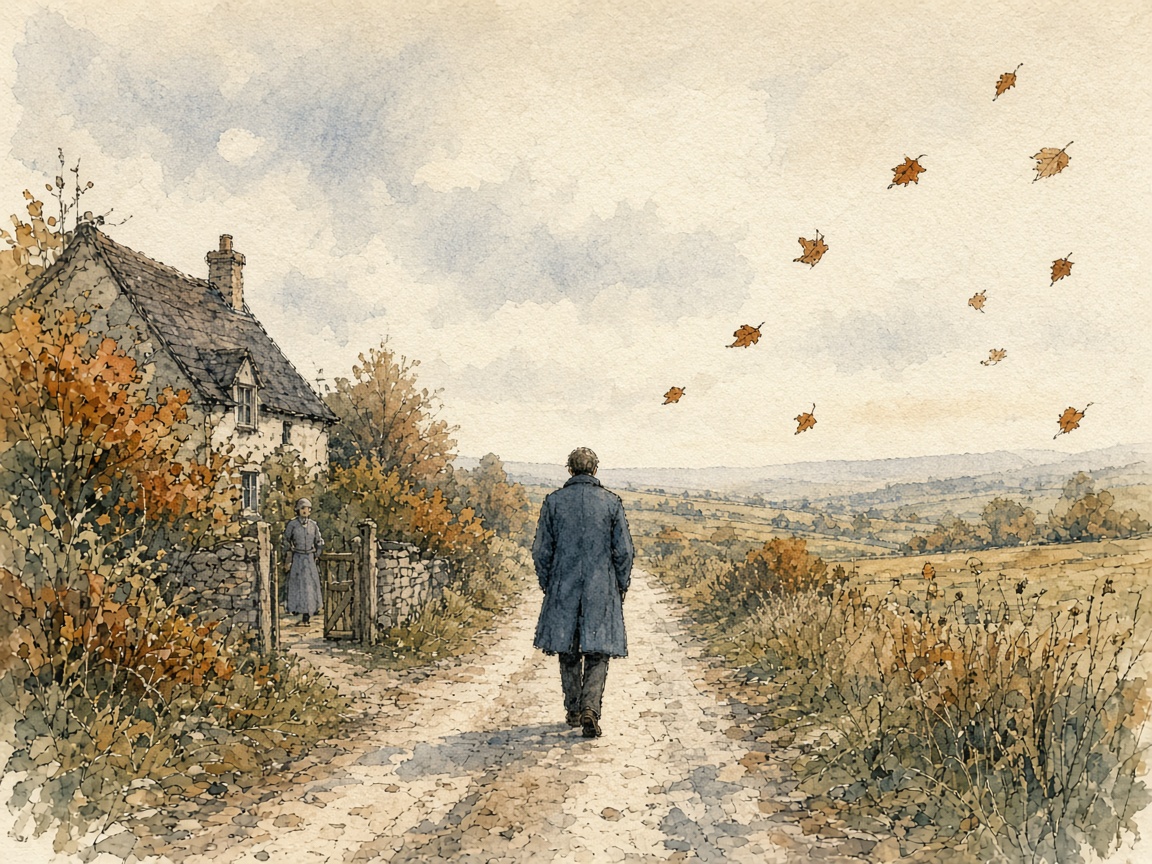
Watercolour illustration of a middle-aged man walking away down a country path toward a bright horizon, while far behind him an older woman stands at the gate of a house

He expected guilt. He expected grief. Both came. Then came something nobody had warned him about: joy.

And for years, he was too ashamed to tell anyone. If you've ever wondered whether you're allowed to walk away from family, read Eamon Dolan's story.

The story

Eamon Dolan was in his 40s when he made the call. Twelve years ago, he writes, he broke up with his mother.

It hadn't come out of nowhere. She beat him and his siblings hundreds of times when they were young. On top of that came what he calls an array of emotional abuse: insults, tirades, humiliation, gaslighting. And it didn't stop when he grew up. It followed him into his 40s.

He tried. For years, he made what he calls futile efforts to change the dynamic between them. None of it worked. So he severed ties with her for good.

Have you ever tried, again and again, to fix a relationship that only one of you wanted to change? How many years did you give it?

He expected to feel guilt and grief after his decision, and he did. What he didn't expect was joy. He calls cutting ties with his mother one of the most transformative, liberating moments of his entire life. It filled him with peace, pride, elation, and anger. Yes, anger, he writes, can be uplifting. They were feelings he had never felt before.

But here's the twist. For several years, he kept that happiness mostly to himself. His happiness, he writes, took a back seat to his shame.

Why would anyone hide the best decision of their life? Because of what people say when you tell them.

When he tells people he's written a book arguing for stepping away from relatives who did us harm, the most common response is concern, but often not for the person who stepped away. "Isn't that devastating for your relatives?" they ask. "Isn't no contact kind of drastic?"

Some went further. They reminded him that spanking was perfectly acceptable among his mother's peers. They assured him she was doing the best she could. They berated him for refusing to forgive and forget. For a long time, he writes, he couldn't find the right answer. Now he has one: no abuser's ignorance or era or condition excuses her behavior, any more than her treatment of them gives them license to abuse other people.

Has anyone ever said "but she's your mother" to you, as if that settled it? How did it land?

Eamon started to see why that pressure is so strong. Kids, he writes, are hard-wired to believe that whatever happens at home is normal, and to put their caregivers on a pedestal no matter how they're treated. Abusers cement that by convincing kids they deserve it. Schools, churches, relatives and neighbors who see and say nothing add to the silence. Even self-help that tells us to forgive, forget and think only good thoughts can make us stifle our pain, which lets abusers off the hook.

He wasn't alone, either. He spoke with dozens of other survivors. One told him he cut ties with his father "to save my life." Another said, "I feel proud that I did it. I want to get a tattoo with the date."

And the numbers are bigger than most people think. Eamon cites a Harris Poll done with psychologist Joshua Coleman that put the share of estranged Americans at 1 in 2. Estrangement, he writes, isn't rare. It may be becoming the norm. If you're considering it, how much of your hesitation is about the relationship, and how much is about what people will think?

Eamon doesn't remember the exact date of his own estrangement. If he did, he writes, he might do the same thing. He considers that day as significant as his birthday. Maybe more, because it's the day he finally stepped out of his mother's dark shadow and into his own light.

What Experts Say

In Boundaries, Henry Cloud and John Townsend separate forgiving someone from reconciling with them. They're two different things. You can work on forgiveness, or not, and still decide that contact isn't safe. That's the exact pressure Eamon describes: people treating "forgive and forget" as a single move.

In It's Not You, Ramani Durvasula names guilt and obligation as a core pattern in relationships with narcissistic people, family included, and lists self-doubt and self-blame among the effects. That helps explain why the shame came after Eamon's decision, not before it.

And in Changing Course, Claudia Black writes that adults from troubled families often carry denial, rigidity, isolation and shame. Eamon's years of keeping his relief to himself fit that picture.

From Jonathan Keim

“A boundary protects your own integrity and energy. A punishment is intentional harm, used to correct someone's behavior.

Look at Eamon's story. His mother's abuse went on into his 40s, and he spent years trying to change things between them. Nothing in his story is about hurting her. It's about getting out from under the harm.

A boundary is about what I will do: I won't stay where I'm being harmed. A punishment is about what I do to you.

So ask yourself honestly: am I trying to make them pay, or am I trying to keep myself safe?”

Your turn

  • Is there a family relationship you keep trying to fix that only you are working on?
  • If guilt and obligation weren't in the room, what would you decide?
  • Who in your life would support your choice, whatever it is? Have you told them?

Try this this week

  1. Write down what you've already tried to change in this relationship, and what happened each time.
  2. List what you feel when you imagine less contact. Let guilt, grief and relief all be on the list.
  3. Pick the level of contact you can live with safely, from repair to limited contact to none.
  4. Tell one safe person what you're considering. Shame grows in silence.

The lesson. Ending a family relationship can be grief and relief at once, and neither feeling cancels the other. In stage 3 (Speak and set limits), you decide what contact you can live with, from repair to no contact, based on safety, not obligation.

Original story: Eamon Dolan, "I Broke Up With My Abusive Mother. I Don't Regret That Decision," The New York Times Opinion (March 2, 2025)

Going through something like this? Apply for coaching